Showing posts with label garden. Show all posts

Bargains for Gardens

Top Three Reasons Why Now Is THE Best Time To Plant New Perennials:


#1 More For Your Money
you can get perfectly healthy plants for 50% off or more as nurseries clear inventory for the end of the season (usually it costs more to water and care for them through the winter, than to take a reduced profit (except mild winter climates))

Beautiful Blue Spirea


#2 Head Start on Next Year
the ground is already warm, the scorching hot weather is mostly behind us. That means plants get off to a fast start. Compared to Spring plantings when growth starts out very slow as things warm up and days are still getting longer.

They may look sparse or insignificant now, but just be patient.
I promise it will more than make up for it next year.


#3 Diamonds in the Rough
save even more, buy "uglies" and clearance plants that have been cut back or are leggy (long, spindly or misshapen)  They may not look very attractive now, but the season is nearing an end anyways. Soon the gardens will be dormant, then you cut them back anyways. Chances are these plants have overstayed thie welcome in the current pot they call home.  Room to spread their roots is all they need to return to glory. Next thing you know,  Spring is here. Those uglies sprout new full and lush stems, and bigger too, since they had time to establish in the fall and now are bigger and better than the nurseries Spring stock.


I buy most of my perennials this way. Sure it's hard to restrain myself in the spring. Strolling through the warm bright greenhouses filled with lush greenery, while it's still cold and blowing outside. But I know what late summer bargains await.

For Example, see this butterfly bush, #1 pot size regularly $25 each. Buy three or more only $10 each, mix and match with this blue mist spirea, rose of Sharon and several others.

Georgous Butterfly Bush #5 Pot, $10, Regularly as much as $25
These babies attract Hummingbirds and Butterflies and their scent is sweet, sweet, sweet. I like to think it smells like honey.

Here, lets get close enough to get a good sniff...


Yummy, right?

Purple cone flower,one gallon perrennial normally $8, now just $5 each. That is an awesome price!!!

Disregard the "work in progress" ground conditions like the thin layer of mulch to keep the mud where it belongs, and the tree stakes. Temporary yet necessary.


Our end of season sales are just under way. Check your local greenhouse and nurseries.  (I pass up the big box store plants. Chances are they have been sitting on pallets in parking lots all summer. Stressed beyond hope from getting too dry or too wet. Sales clerks here lack the love and TLC nurseries have for their plants) In some areas it may still be too soon, but keep checking.

 Last year we practically STOLE these trees all for $150 each!!!
this lance leaf poplar was 18 feet tall and the trunk is 6 caliper inches. many deciduous tree sold by the caliper inch, usually average $100 per inch.


This seedless, thornless honey locust, almost 20 feet tall ( we transported them in our 16 foot long trailer. the tops of the trees overhung about 10 feet( because of the root ball ) it was not ideal but you couldn't beat the price!!!

To give you an idea of how big this guy is, that Vanderwolf Pine in the lower right hand corner is about 5' tall.


Since we haven't reached the one year anniversary in our new house yet, we still have lots more landscaping to do.

10 foot tall Bosnian pines 2 for $300. I was only able to find 5-6 foot tall one for $200 each.


We are saving so much money and hopefully will recieve a Yard of the Week award in a few years!!!

You might also be interested in some of my other Gardening Posts

iGrow ~you can, too~ No.6 Bulbs

Fall Bulbs
Now is the time to plant for the first flowers or Spring
I know it's not easy to think of Winter around the corner and Spring even farther still.
Bulbs help me get over what can seem like never ending cold.
Because we can get 8 inches of this white stuff here, even in May!


Buy them now.
Wait at least until Halloween to plant!

The best time to plant is after Halloween and before the ground freezes. 

Milder climates should be planted no later than January to ensure enough time for the bulbs to chill (no less than 6 weeks) If you plant too early, the ground may be too warm still, the bulbs may be fooled into thinking they need to sprout. Of course it's not Spring and when it does get cold they will just die, having awakened from their sleep and started to grow, they send out some shoots and roots. But they can't complete the cycle of flowering and growing new bulbs. So don't plant until the ground has cooled.


How to Plant

Dig a hole, a good rule of thumb is twice  as deep as the bulb is tall. Muscari 1 inch deep, Daffodil 5 inches deep. (Meaning the TOP of the bulb is 1, or 5, inches below the surface)

Add a teaspoon of bone meal (long lasting fertilizer) to the bottom of the hole. I actually use a designated kitchen spoon for this. Scrape the granules into the dirt a bit.
Set your bulb in the hole, pointy side up.

    Backfill in with dirt. If you have normal topsoil or garden soil, just fill the hole in with the dirt you dug out.  *However* If you are planting these in an out of the way place that has very rocky, dense clay or otherwise harsh soil conditions. Fill the hole back in with some "better" soil. Bulbs shoot up through the earth, but if the ground is too hard, like the clay and adobe around here, you may end up disappointed.


      You may skip the fertilizer, but remember this is your only opportunity to give these guys a good home. Most common bulbs come back year, after year, after year. So put in that little extra effort now.

      Tips for Naturalizing

      • Plant in groups. I dig a very large hole for Daffodils and put in 5-7 bulbs about 2 inches apart.

      • Plant an odd number of bulbs together. Even numbers look planned and mathematical. (unless you have a dozen or more)
      Plant in unexpected places! I toss Crocus corms onto the lawn by the handful. Using a screwdriver, wiggle little holes into the lawn about an inch and a half deep. Stick the little crocus in. They flower and die back long before you need to mow and are so cute and unexpected.Also, they usually don't return the next year because the grass gets too much water, but are very inexpensive, I use them as an annual in this application.

      Oh, Deer! 


      These beauties above are pretty safe from those garden nibblers, including the big beautiful yellow Daffodils (not pictured) we all know so well.
      {These are pictures from the packages of bulbs, I just planted, forgive the "staples" please.}
      • Deer Love Tulips! Just don't plant them where deer have access to avoid tears.

      • Deer won't touch Daffodils or Narcissus or Jonquils (all in the same family)

      • They also avoid Crocus, Allium, Muscari, 

      Bulbs are probably the single most gratifying planting experience. Take some hard, homely, papery skin covered bulbs. Dig a hole and drop them in with a spoonful or bone meal in the fall. Keep moist (this is kinda important). If you live in an area that gets little winter moisture or if your ground is NOT covered with snow for a few months. Get out there at least once a month and pour some water over those patches of earth above your little bulbs of soon to be spring joy. When the spring sun warms the soil,'those beauties will sprout. You can have large beautiful blooms (almost guaranteed) with very little effort. Tulips, Daffodils, and crocus, Grape Hyacinth (Muscari), and true Hyacinth are the first five to consider. Bulbs can be pricey. Try Home Depot or Lowe's bags of bulbs at a significant discount compared to your local nursery.  Beware, you get what you pay for here. I have found that only as much as 50% of bulk bulbs come up in the spring compared to 99.9% of the pricier, nursery bought bulbs.


      I am not a professional, these a just my opinions. What works for me, may not work for you.

      Easy to grow if you dig a hole bigger than the pot, add a handful or two of some compost. Fill the hole with water, put the plant in and backfill around the plant with the original soil mixed with a couple more handfuls of compost. Water it every day for the first two weeks, then about three times amweek the first year to establish the roots.
      4-8 hours of sun or more and water regularly (2-3 times a week) should be all you need to grow successful plants.

      iGrow ~and you can,too~ No. 5 Sage

      Sage {Salvia officinalis}

      A wonderful foundation planting since it is evergreen in some areas (not mine) and comes in three different colors. Not to mention it's place in the kitchen every Thanksgiving.

      Grey/green
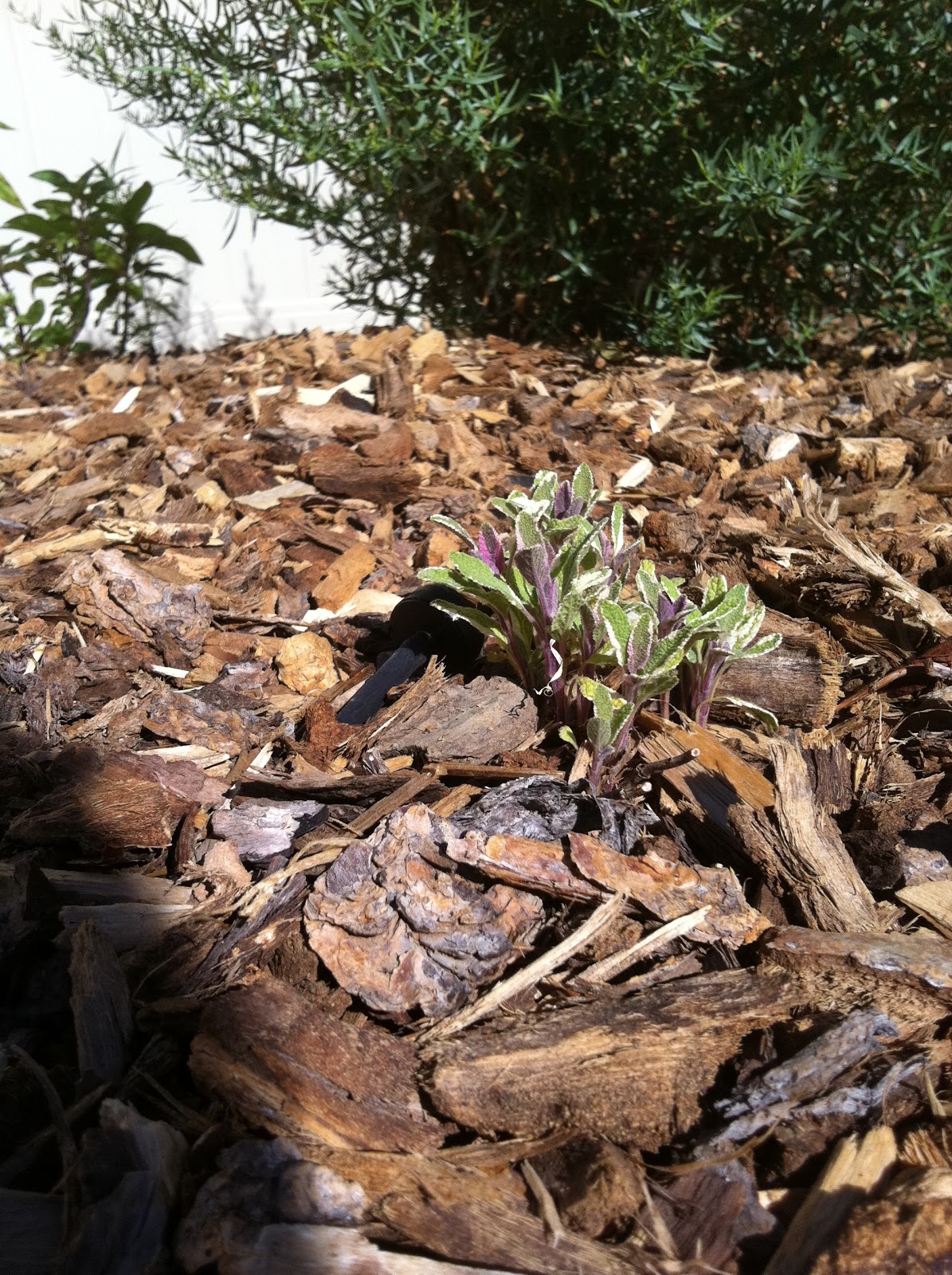
      Very small  plant, from a six pack, planted last fall
      Even this small you can see the blue/purple flowers

      Bicolor
      very interesting foliage
      4" pot planted last fall

      and Tricolor
      Poor thing, almost a goner, trampled while planting a pear tree.
      green, cream and purple leaves

      The do grow to about 2 feet by 2 feet with woody stems. Wildlife leave them alone unless desperate. Again I've never had any issues with pests on any of my perrenial herb plants. These pair nicely with many other plants due to their pretty foliage. The also have upright blue/purple flowers that attract bees.

      Later this summer when these guys get bigger, I'll update some pictures or click here for tricolor sage (most comprehensive herb source online, that i have found) 

      I am not a professional, these a just my opinions. What works for me, may not work for you.

      Easy to grow if you dig a hole bigger than the pot, add a handful or two of some compost. Fill the hole with water, put the plant in and backfill around the plant with the original soil mixed with a couple more handfuls of compost. Water it every day for the first two weeks, then about three times amweek the first year to establish the roots.
      4-8 hours of sun or more and water regularly (2-3 times a week) should be all you need to grow successful plants.

      iGrow ~and you can, too~ No.4 Lavender

      Hardy Lavender {Lavandula angustifolia 'hidcote"}

      It's hard to say Hardy Lavendar is my 4th favorite because I love so many plants, so much. A home just isn't a home without a few lavender plants. In just about two short years, a 4" pot of lavender will transform into a large mound of soothing purple blooms atop long stems. Pleanty to cut, dry and use in satches or heat packs. Or perfume your lemonade with a long stem as a swizzle stick.

      Here you can see the blooms have opened

      Here you can see the buds have yet to open
      This is what you want to harvest it you want to use them in scented pillows or sachets...


      You can't beat their low maintenance, easy to grow, deer proof, pest free, soothing therapeutic scent. Even the leaves have a sweet lavender scent.


      I am not a professional, these a just my opinions. What works for me, may not work for you.

      Easy to grow if you dig a hole bigger than the pot, add a handful or two of some compost. Fill the hole with water, put the plant in and backfill around the plant with the original soil mixed with a couple more handfuls of compost. Water it every day for the first two weeks, then about three times amweek the first year to establish the roots.
      4-8 hours of sun or more and water regularly (2-3 times a week) should be all you need to grow successful plants.

      iGrow ~and you can, too~ No.3 Thyme

      Thyme {Thymus}
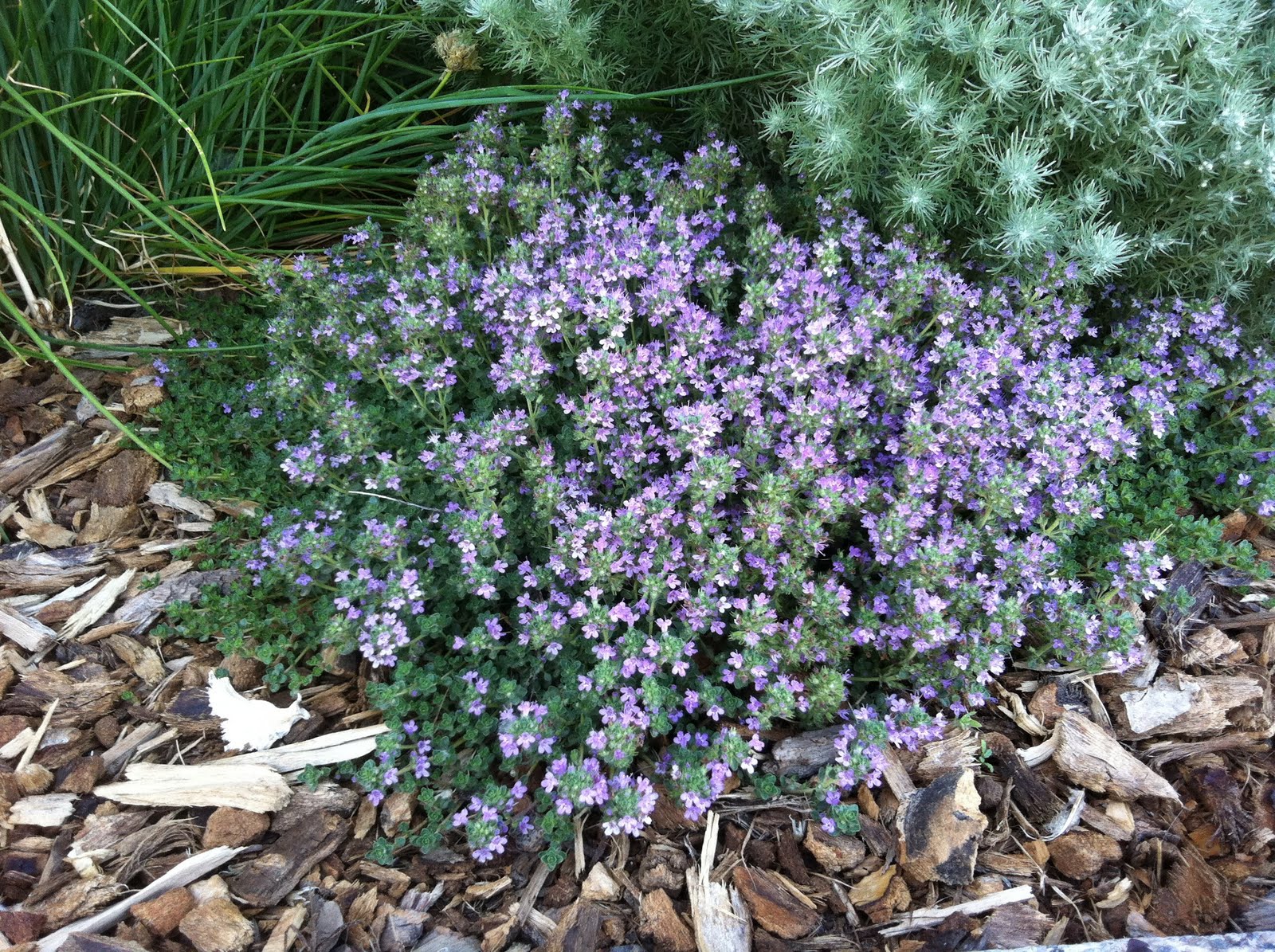
      Thyme in bloom

      I am a huge fan of herbs. They're so versatile. With a variety of sizes, shapes and yes, flowers, they are perfect for your perennial bed, borders and even in your veggie garden.
      Teeny tiny leaves of  Elfin Thyme in the foreground
      Wooly thyme moving in from behind.
      Excellent ground cover, in rock gardens and between pavers.

      My third favorite would have to be Thyme. Multiple colors from blueish grey, bright green, yellow green, 4" tall to ground hugging. Shiny and fuzzy leaves. They are perfect between paver stones as they release their scent when you step as well as rock gardens. I use them on the edge of my borders next to walkways since they are compact and their tiny leaves can be appreciated as you pass by. I do not use herbicides or pesticides in my yard so I can always feel safe about running out to grab a snip of this or pinch of that.
      Wooly Thyme
      Silvery, hairy little leaves.

      I'd also like to mention hat pests seem to steer clear of my perennial herbs altogether. Maybe it's their strong aromas, I'm not quite sure why but they have always been spared.
      Spring an early summer they are blanketed in tiny bright pink flowers. Though some varieties are flowerless.


      I am not a professional, these a just my opinions. What works for me, may not work for you.

      Easy to grow if you dig a hole bigger than the pot, add a handful or two of some compost. Fill the hole with water, put the plant in and backfill around the plant with the original soil mixed with a couple more handfuls of compost. Water it every day for the first two weeks, then about three times amweek the first year to establish the roots.
      4-8 hours of sun or more and water regularly (2-3 times a week) should be all you need to grow successful plants.

      iGrow ~and you can, too~ No.2 Mint

      Mint {Mentha}
      Chocolate mint
      Notice the purple toned stem
      Just planted last fall

      One of my all time favorite plants "mint" there are so many varieties to chose from. Like Apple, Banana, Pineapple,and Chocolate. You can even get varieties dating back to biblical times, such as the Habek variety, Just to name a few. I know some of you are offended by mint's vigorous growth habits and it's tendency to overstep it bounds.
      Apple Mint
      Thicker, slightly fuzzy leaves
      Just planted a couple weeks ago

      I just love it. It's great fun to grow with kids.
      A fun identifying feature, mint stems are square.

      I wouldn't plant it in my front display bedbut it certainly does a nice job of filling difficult or unsightly areas like slopes or behind the shed...an added bonus is you can set your mower up high and mow it or weed eat it and the air is filled with the fresh invigorating scent. I'd grow it as a lawn if the stems weren't so woody- just to mow it and breath he invigorating sweet aroma. I also use it a lot in my all time favorite mint lemonade as well as in my fresh Vietnamese spring rolls.
      Spearmint
      Sharper serrated leaf edges
      planted last fall

      It is a fast grower, can adapt to drier conditions once established but still needs regular moisture. Sun to part shade. In the ground or in containers. There's a mint for everyone. And I've grown it successfully even here in dry, windy, cold, hot, intensely close to the sun Colorado.
      Peppermint
      common
      planted last fall


      I am not a professional, these a just my opinions. What works for me, may not work for you.

      Easy to grow if you dig a hole bigger than the pot, add a handful or two of some compost. Fill the hole with water, put the plant in and backfill around the plant with the original soil mixed with a couple more handfuls of compost. Water it every day for the first two weeks, then about three times amweek the first year to establish the roots.
      4-8 hours of sun or more and water regularly (2-3 times a week) should be all you need to grow successful plants.

      iGrow ~and you can,too~ No. 1 Sedum

      Sedum/Stonecrop {Sedum}
      young, 9 month old plant, center
      Silver mound artemesia on left
      An agastache on the right

      My most recent favorite plant family is the Sedum/Stonecrop species. There are hundreds of plants in the sedum family from tiny pearl like matted groundcovers to tall erect almost bush like. These plants are hardy, drought tolerant once established, semi-deer proof and super easy to grow.
      The varieties are near endless from deep dark purple leaves and stems to chartreuse. Blooms from Spring to fall. Flowers ranging from yellow, pink and purple-ish. I am still discovering new, hybrid varieties every year.

      dramatic "black" variety


      My all time favorite is "Autumn Joy" it's tall stems with mauve edged green leaves and mauve stems topped with dusty mauve flowers in late summer. An architecturally interesting perennial all year long. Even attractive in the winter as the dome shaped flower heads are very sturdy when dried by the sun.
      Clumping growth habit, easy to divide.

      The succulent leaves add interest and combine well paired with just about anything. It's currently in my front border with Bearded Iris, Daylilies, Silver Mound Artemesia, and Thyme. All of my plantings are less than a year old since we just moved in late August 2010. All Hess plants were in small 4" pots. They are fast growers even in Colorado.


      I am not a professional, these a just my opinions. What works for me, may not work for you.

      Easy to grow if you dig a hole bigger than the pot, add a handful or two of some compost. Fill the hole with water, put the plant in and backfill around the plant with the original soil mixed with a couple more handfuls of compost. Water it every day for the first two weeks, then about three times amweek the first year to establish the roots.
      4-8 hours of sun or more and water regularly (2-3 times a week) should be all you need to grow successful plants.